Regimental Street · Collectors' Club
The weapons that shaped modern history.
A collector's history from the Old West to the Cold War.
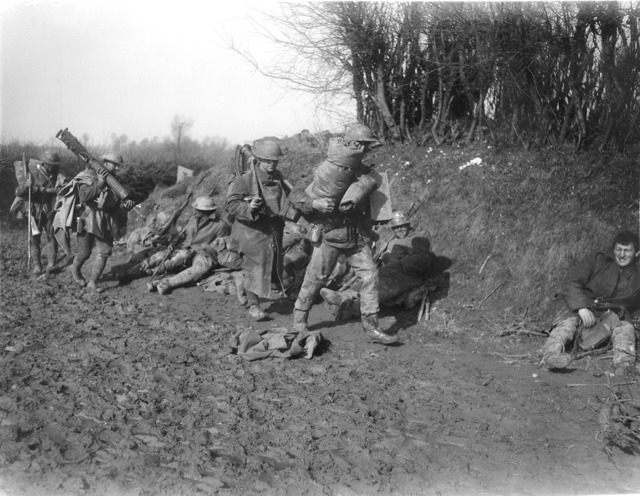
Supporting troops near Hooge, Ypres, 5 October 1917. Frank Hurley, Australian War Memorial E00833 (public domain)
1866 – 1890s
The Old West
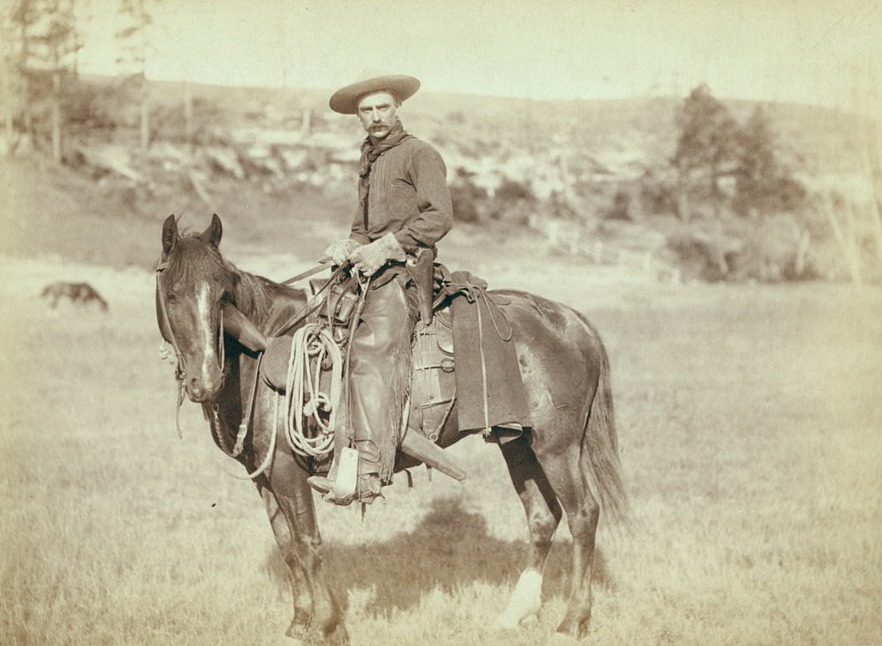
In the decades after the American Civil War, two inventions changed how many shots one person could carry: the lever-action repeating rifle and the metallic-cartridge revolver. Both became symbols of the American frontier.
What changed
Before the 1860s most soldiers and settlers carried single-shot muzzleloaders. Self-contained metallic cartridges made repeating rifles and fast-loading revolvers possible, and multiplied the shots one person could fire.
- 1866
- Winchester's first rifle under its own name
- 1873
- The US Army adopts Colt's Single Action Army
- Lever action
- Work the lever and fire again, with no reloading in between
- Brass cases
- Powder, primer and bullet in one cartridge, which made repeaters practical
Featured collection
Famous weapons of the Old West
Select a weapon to read its history.
1914 – 1918
The First World War
The First World War was fought on a scale no one had prepared for. Rifles that would have been familiar to a soldier of the 1890s met machine guns, quick-firing artillery and barbed wire, and the result was the stalemate of the trenches.
What changed
Bolt-action rifles were still the soldier's main weapon, but the machine gun dominated the battlefield. By 1918 armies had added light machine guns, grenades and new tactics built around small, mobile groups.
- 1914–1918
- Four years of global war
- 416,000+
- Australians enlisted, from a population under five million
- 60,000+
- Australians died
- 3
- Main theatres for Australians: Gallipoli, the Western Front, and Sinai and Palestine
Featured collection
Famous weapons of WW1
Select a weapon to read its history.
1918 – 1939
Between the wars
The lessons of 1914 to 1918 shaped every army's choices for the next war. Three changes stand out.
01
The submachine gun arrived
John T. Thompson's "Tommy gun" went on sale in 1921. Police and gangsters bought it first, and armies came around just before WW2.
02
Machine guns moved to the section
The heavy, crew-served guns of WW1 were joined by light machine guns carried by every infantry section.
03
The pistol stayed
The M1911 was refined into the M1911A1 in the 1920s and carried American soldiers through WW2 and beyond.
1939 – 1945
The Second World War
Twenty years later the fighting was faster and more mobile. Tanks, aircraft and radio changed how battles were fought, and infantry weapons changed with them: lighter machine guns, submachine guns and the first general-issue semi-automatic rifle.
What changed
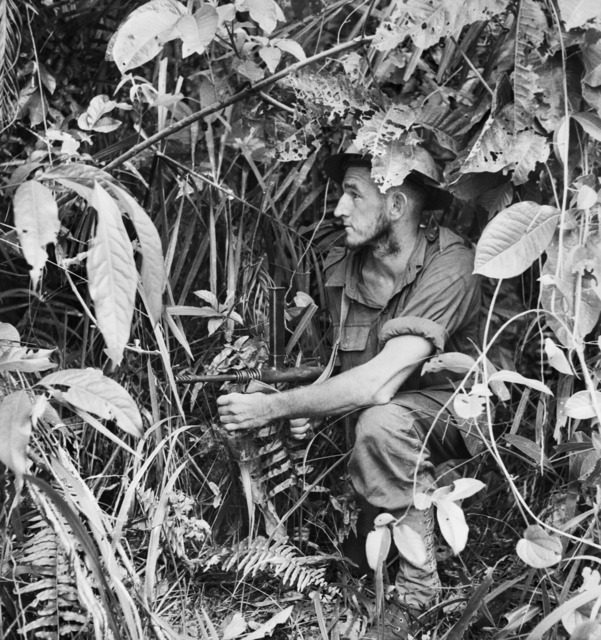
Firepower moved down to the smallest units. Every infantry section carried a light machine gun, and submachine guns gave close-range firepower for street fighting and jungle warfare.
- 1939–1945
- Six years of global war
- ~1 million
- Australians served, men and women
- 39,000+
- Australians died
- Europe to the Pacific
- From Tobruk and Greece to Malaya, New Guinea and Borneo
Featured collection
Famous weapons of WW2
Select a weapon to read its history.
1947 – 1991
The Cold War
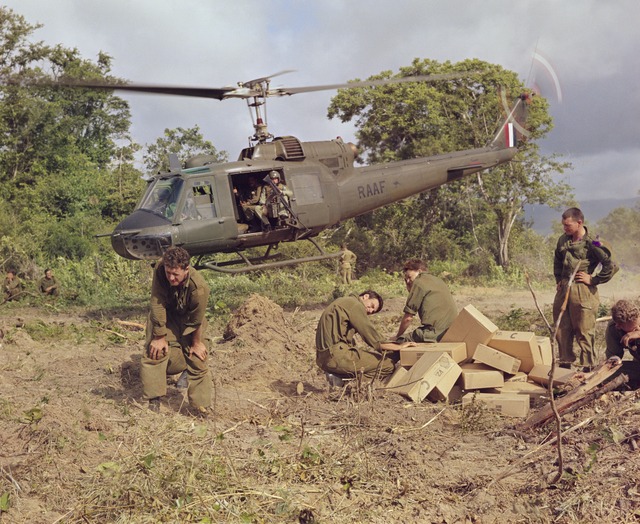
After 1945 the world divided into two armed blocs, and both rearmed with a new kind of rifle: the assault rifle, lighter than the rifles of the world wars and able to fire on full automatic. In Vietnam, Australians carried one and faced the other.
What changed
Full-power battle rifles gave way to lighter rifles firing smaller cartridges, so soldiers could carry more ammunition. Pistols changed too, as high-capacity 9mm designs replaced older sidearms.
- 1947–1991
- From the first AK to the fall of the Soviet Union
- ~60,000
- Australians served in the Vietnam War
- 500+
- Australians died in Vietnam
- ~100 million
- AK-pattern rifles estimated to have been made
Featured collection
Famous weapons of the Cold War
Select a weapon to read its history.
Know the rules
Collecting militaria responsibly in Australia
Militaria covers far more than weapons: medals, badges, insignia, uniforms, documents, maps and photographs are all part of the story, and most collections start there.
- Rules for firearms, deactivated firearms and imitation or replica firearms are set by each state and territory, and they differ. Check with the firearms registry or police in your state before you buy anything weapon-related.
- Many items need a licence or permit, or can't be legally owned at all. If in doubt, ask before you buy.
- Keep a record of where each piece came from and when you got it. Good records add to a collection's history and value.
- Treat items connected to servicemen and servicewomen with respect, especially medals and personal effects.
See them in person
Where to see military history in Australia
Canberra, ACT
Australian War Memorial
The national collection, covering Australians at war from colonial times to today.
Lithgow, NSW
Lithgow Small Arms Factory Museum
On the site of the factory that made Australia's service rifles for both world wars.
Melbourne, VIC
Shrine of Remembrance
Victoria's war memorial, with a gallery of objects and personal stories.
Fremantle, WA
Army Museum of Western Australia
Housed in the historic Artillery Barracks, covering the Army from colonial times onward.